
Seasonal Exterior Cleaning Benefits for Your Home
Table of Contents
Why Seasonal Exterior Cleaning Matters for Your Home
Best Time of Year to Pressure Wash a House
What the Local Climate Does to Your Schedule
Season-by-Season Guidance
Signs It's Time, Regardless of Season
How Often to Clean House Exterior Surfaces
Exterior Home Cleaning Checklist by Season
Spring Checklist
Summer Checklist
Fall Checklist
Winter Checklist
Gutter Cleaning Schedule and Maintenance
Soft Washing Versus Pressure Washing: Protecting Your Surfaces
Preventing Costly Damage: Organic Growth, Mold, and Water Intrusion
DIY Versus Professional Cleaning: What Makes the Difference
Tasks Most Homeowners Can Handle Safely
Tasks Where DIY Often Goes Wrong
A Simple Decision Framework
What Professional Service Actually Adds
A Reasonable Split
Frequently Asked Questions
Last Updated: October 12, 2026
Why Seasonal Exterior Cleaning Matters for Your Home
Your home's exterior faces constant assault from weather, dirt, and organic growth. Rain, sun, wind, and temperature swings break down paint, siding, and roofing materials.

When you skip seasonal cleaning, problems compound. Mold and mildew thrive in damp conditions. Algae spreads across roofing shingles.
The good news: a consistent cleaning schedule prevents most of this damage. Regular maintenance stops small problems from becoming expensive repairs.
Best Time of Year to Pressure Wash a House
Timing matters, but the calendar alone is a poor guide. What actually drives the right window is a mix of local climate patterns, the material you're cleaning, and what the surface is telling you. Here's how to read all three.
What the Local Climate Does to Your Schedule
Coastal humidity, salt air, and a long warm season change the math compared with inland advice. A few patterns most homeowners notice:
Pollen season hits hard and early. A heavy yellow-green coating lands on siding, screens, cars, and porches within days. Pollen is acidic and holds moisture against surfaces, so it's worth rinsing off rather than letting it bake on. A soft wash in mid-spring removes it without driving it into the grain.
Humidity keeps organic growth active longer. Algae and mildew don't fully go dormant in mild winters the way they do in colder regions. Shaded north-facing walls and roof planes can stay green year-round, which means an annual roof treatment is often a minimum, not a maximum.
Salt air accelerates surface wear. Homes within a few miles of the water see faster oxidation on metal fixtures, faster chalking on paint, and more stubborn film on glass. Rinsing salt residue off more often, especially after windy weather, slows that process.
Storm season resets everything. Heavy rain and wind drive grit into siding, pack debris into gutters, and knock organic material onto roofs. A post-storm walkaround is more useful than a fixed date on the calendar.
Season-by-Season Guidance
Spring: remove winter and pollen buildup. Soft wash siding and painted trim to lift pollen and winter film.
Summer: inspect and treat growth. Warm, humid conditions are peak season for algae and mildew. This is the best window for roof soft washing, since dry, stable weather lets cleaning solutions dwell and rinse properly.
Fall: prepare for wind and rain. Leaves and debris are the priority. Clear gutters, roof valleys, and downspouts so storm water has somewhere to go.
Winter: gentle, targeted cleaning only. Skip high-pressure washing when temperatures approach freezing, water can refreeze in cracks and cause spalling on concrete and masonry.
Pro Tip A simple rule of thumb: if the overnight low is forecast near or below freezing, postpone pressure washing. Soft washing with a controlled solution is the safer option in cool weather.
Signs It's Time, Regardless of Season
Don't wait for a date on the calendar. Act when you see:
Dark streaks or green film on roofing or siding
A slippery, slick feel on walkways or a driveway
Visible pollen coating that won't rinse off with a hose
Water overflowing gutters during rain
Chalky residue or dull finish on painted surfaces
Salt haze on windows and glass doors
If two or more of these are present, a cleaning is overdue, and the longer organic growth sits, the more it etches into the surface underneath.
How Often to Clean House Exterior Surfaces
Cleaning frequency depends on your climate, materials, and surrounding environment. Most homes benefit from seasonal exterior cleaning, at minimum, once per season. Some surfaces need more frequent attention.
Recommended cleaning schedule:
Gutters: Every 3-4 months, or after storms
Roof: Once yearly in fall, or as needed for algae/moss growth
Siding: Twice yearly (spring and fall) for most materials
Driveway/walkways: Once yearly minimum, twice if heavily used
Windows: Quarterly or as needed
Deck/fence: Once yearly before winter, or twice if heavily trafficked
Homes near the ocean or in humid climates may need more frequent cleaning. Salt air accelerates surface deterioration. High moisture promotes mold and algae growth. Wooded properties need more frequent gutter cleaning and roof inspection.
Exterior Home Cleaning Checklist by Season
A structured approach ensures nothing gets missed. Use these checklists to plan your seasonal maintenance.
Spring Checklist
Clear gutters and downspouts of winter debris
Inspect roof for winter damage or missing shingles
Soft wash siding to remove pollen and winter grime
Clean windows and glass doors
Pressure wash driveway and walkways
Inspect foundation for cracks or water damage
Check deck or patio for winter wear
Summer Checklist
Inspect roof for algae, moss, or deterioration
Check for mold or mildew on shaded siding
Clean gutters mid-summer if needed
Pressure wash concrete surfaces
Inspect deck staining and sealant
Check window seals for gaps or damage
Look for pest damage or entry points
Fall Checklist
Clear all leaves from gutters and roof
Inspect gutters for damage before winter
Soft wash siding to remove summer grime
Clean roof valleys and downspouts thoroughly
Pressure wash driveway before salt season
Seal or stain deck before winter weather
Trim tree branches near roof and gutters
Winter Checklist
Remove salt stains from concrete and brick
Soft wash siding if temperatures allow
Clear snow and ice from gutters carefully
Check for water intrusion after thaws
Inspect for ice dam formation
Remove heavy snow buildup from roof edges
Clean windows when weather permits
Gutter Cleaning Schedule and Maintenance
Gutters are your home's first line of defense against water damage. Clogged gutters cause water to overflow, damaging siding, foundation, and landscaping.
Clean gutters at least twice yearly: once in late spring and again in fall. Homes with heavy tree coverage need quarterly cleaning.
Signs your gutters need cleaning:
Water overflowing during rain
Sagging or pulling away from fascia
Visible debris or leaves
Moss or algae growth
Water stains on siding below gutters
Basement moisture or water damage
Professional gutter cleaning removes debris safely and inspects downspouts for clogs. Gentle techniques protect your gutters while ensuring proper drainage.
Soft Washing Versus Pressure Washing: Protecting Your Surfaces
Not all exterior surfaces tolerate high-pressure water. Choosing the right cleaning method prevents costly damage.
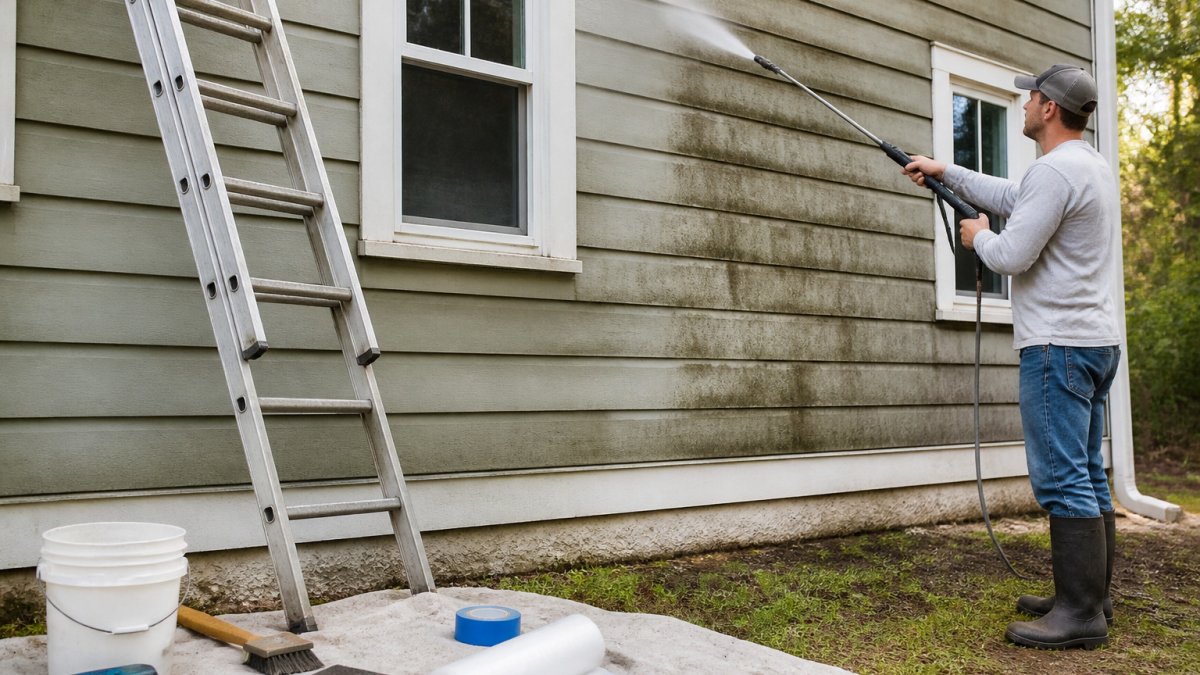
Soft washing uses low-pressure water combined with cleaning agents.
Pressure washing uses high-pressure water to blast away stubborn stains. It works well for concrete, brick, and metal surfaces.
Many homeowners learn this lesson the hard way.
The right approach matches the surface:
Vinyl siding: Soft wash only
Wood siding: Soft wash or low-pressure only
Painted surfaces: Soft wash
Concrete/asphalt: Pressure wash safe
Brick: Pressure wash with caution, soft wash preferred
Roof: Soft wash only
Deck: Low-pressure or soft wash depending on material
Professional cleaners understand these differences. They use high-quality cleaning agents and gentle wash techniques to safely restore surfaces without damage.
Preventing Costly Damage: Organic Growth, Mold, and Water Intrusion
Organic growth, mold, mildew, algae, and moss, accelerates surface deterioration.
Mold and mildew indicate moisture problems. They grow on shaded, damp areas.
Algae appears as dark streaks on roofing. It spreads quickly in humid climates.
Regular seasonal exterior cleaning removes these growths before they cause damage.
Prevention costs far less than repair. A roof damaged by years of algae growth may need replacement.
DIY Versus Professional Cleaning: What Makes the Difference
Not every exterior cleaning job needs a crew. Some are genuinely safe and satisfying to do yourself. Others carry real risk, to your surfaces, your safety, or both. Here's a practical way to sort them.
Tasks Most Homeowners Can Handle Safely
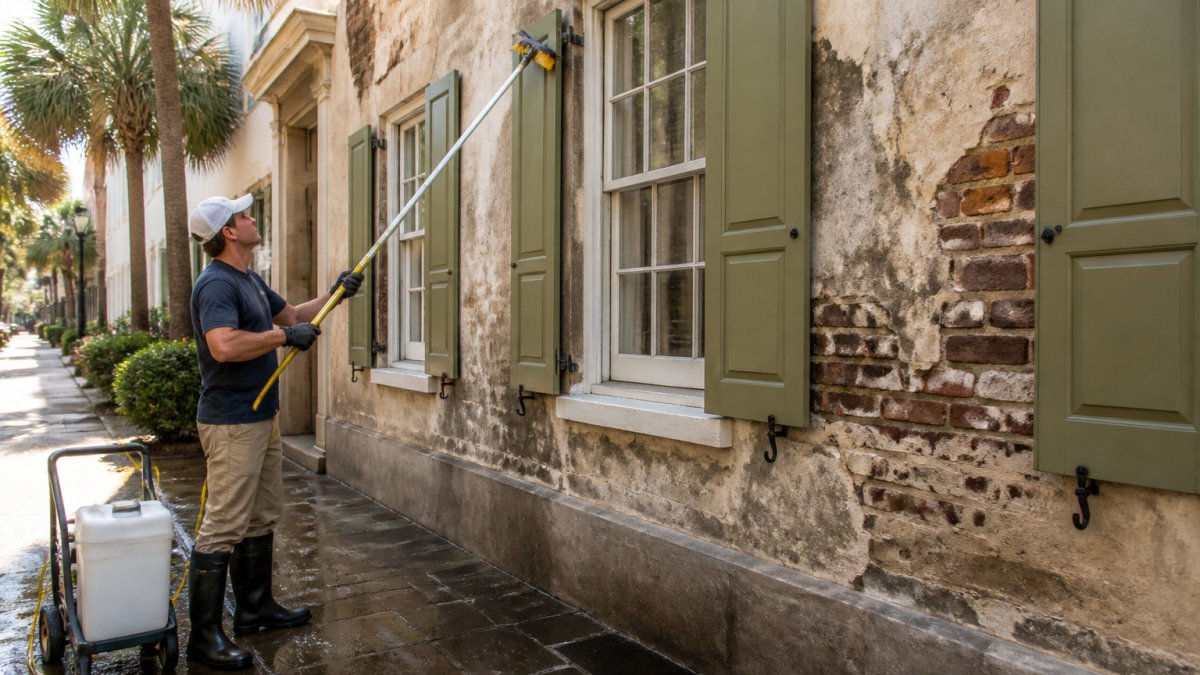
Rinsing pollen and light dust off siding and windows with a garden hose and a soft brush or extension pole.
Clearing gutters from the ground using a gutter scoop on a pole or a hose attachment, provided you stay off the roof and away from the edge.
Spot-cleaning glass with a squeegee and a mild solution.
Sweeping and rinsing hard surfaces to remove loose grit before it stains.
These are low-risk because they use low pressure, no harsh chemistry, and keep you on solid ground.
Tasks Where DIY Often Goes Wrong
Roof cleaning. Walking a roof is the single biggest fall risk on most homes, and the wrong method, high pressure or harsh bleach, can void shingle warranties and damage flashing. Soft washing a roof requires the right solution strength, dwell time, and rinse technique.
Soft washing siding. The chemistry matters as much as the pressure. Too strong a mix can dull vinyl, streak paint, or kill landscaping. Too weak and the growth comes back in weeks.
Pressure washing concrete and masonry. Even here, too much pressure or a too-close tip etches the surface and leaves permanent stripes.
Anything at height. Ladders, second stories, and roof edges are where most injuries happen.
A Simple Decision Framework
Ask three questions before you start:
Is the surface delicate? Wood, painted trim, vinyl, stucco, and roofing all call for soft washing or low pressure. If you're not sure what pressure is safe, that's your answer.
Is the job at height? If it requires a ladder above the first story or any roof access, the risk usually outweighs the savings.
Is the growth established? Light surface dirt is a DIY job. Deep-set algae, moss, or mildew needs a treatment that kills the organism at the root, not just a rinse.
What Professional Service Actually Adds
Correct method for the material, soft wash versus pressure wash, and the right solution strength for each surface.
Equipment you don't own, proper extension wands, soft-wash systems, and safe access for second stories.
Liability coverage, if something is damaged, you're not absorbing the cost.
Consistency, a recurring schedule that keeps growth from re-establishing.
Watch Out Never mix cleaning chemicals yourself, and never combine bleach with ammonia-based products (Hazard Communication for Disinfectants Used Against Viruses | NIOSH). If you're unsure what a surface can tolerate, test a small, hidden area first, or leave it to a professional.
A Reasonable Split
Many homeowners handle routine rinsing, window spot-cleaning, and ground-level gutter clearing themselves, then bring in a professional for roof treatments, full-house soft washing, and any job that involves height or delicate materials. That split keeps costs down while protecting the surfaces that are expensive to replace.
Frequently Asked Questions
What are the main benefits of seasonal exterior home cleaning?
Seasonal exterior cleaning removes organic growth like mold, algae, and mildew that accumulate throughout the year. It prevents water intrusion that can damage siding and foundations, extends the lifespan of roofing and paint, and significantly improves curb appeal. Regular cleaning also allows you to spot structural issues early, when repairs are less expensive. A clean exterior protects your investment and maintains your home's appearance and integrity across changing weather conditions.
How often should I clean the exterior of my house?
Most homes benefit from a thorough exterior cleaning twice per year, typically in spring and fall. High-traffic areas like driveways and walkways may need cleaning more frequently due to dirt and algae buildup. Gutters should be cleaned at least twice yearly, especially if you have trees nearby. Roofs and siding may need attention annually or every two years depending on your local climate, weather exposure, and the presence of organic growth. Professional inspection helps determine the right frequency for your specific situation.
What is the best time of year to pressure wash a house?
Spring is ideal for pressure washing after winter buildup of salt stains, dirt, and grime. Fall is equally important to remove leaf debris and prepare surfaces for winter weather. Avoid pressure washing in freezing temperatures, as water can refreeze on surfaces and cause damage. Summer works for spot cleaning and inspection, while winter requires softer washing techniques to safely remove salt without harming siding or roofing materials. The best timing depends on your local climate and what type of debris or growth you're addressing.
When should I hire a professional for exterior cleaning instead of doing it myself?
Professional cleaning is recommended for roofs, as DIY attempts risk personal injury and potential shingle damage. Professionals use the right water pressure and soft washing techniques to protect delicate surfaces like siding and windows that can be damaged by high-pressure washing. If you've struggled with algae or mold returning quickly, professionals have access to higher-quality cleaning agents and equipment that provide longer-lasting results. For commercial properties or if your home has multiple exterior materials, professionals ensure each surface is cleaned safely and effectively.
GET A QUOTE

Comments