
Soft Wash vs Pressure Wash for Siding
Table of Contents
Soft Washing Versus Pressure Washing: Definitions and Key Differences
How Soft Washing Works
How Pressure Washing Works
Water Pressure and Equipment Differences: PSI and GPM Explained
Benefits of Soft Washing Siding
Root-Level Treatment of Organic Growth
Extended Cleaning Longevity
Pressure Washing Damage to Siding: Risks and Surface Damage
Paint Damage and Etching
Water Intrusion Behind Siding Panels
Recommended Cleaning Method by Siding Material
Vinyl Siding
Brick and Stucco
Wood and Fiber Cement
Aluminum, Engineered, and Painted Siding
Quick Reference by Material
How to Safely Remove Moss from Roof Shingles
Chemical Treatment Approach
Rinsing and Dwell Time Considerations
DIY Versus Professional: Making the Right Choice
When DIY Makes Sense
When to Hire a Professional
What DIY Actually Requires
The Cost and Value Trade-Off
Questions to Ask Before You Hire
Frequently Asked Questions
Last Updated: October 9, 2026
Soft Washing Versus Pressure Washing: Definitions and Key Differences
The choice between soft wash vs pressure wash for siding comes down to one question: do you want to remove surface dirt, or treat the root cause of organic growth? At Sunshine Pressure Washing and Window Cleaning, we work with homeowners and business owners who've struggled with both.
How Soft Washing Works
Soft washing uses low-pressure water combined with specialized cleaning solutions to eliminate organic growth at its source.
The process: apply cleaning solution, allow dwell time, then rinse at low pressure. Dwell time is critical, most jobs need 24 to 48 hours for optimal results, though visible improvement often appears within hours.
Pro Tip The real power of soft washing isn't what happens during the cleaning, it's what happens after. Because you're treating the organism chemically, regrowth takes significantly longer compared to pressure washing, which only removes the visible surface layer.
How Pressure Washing Works
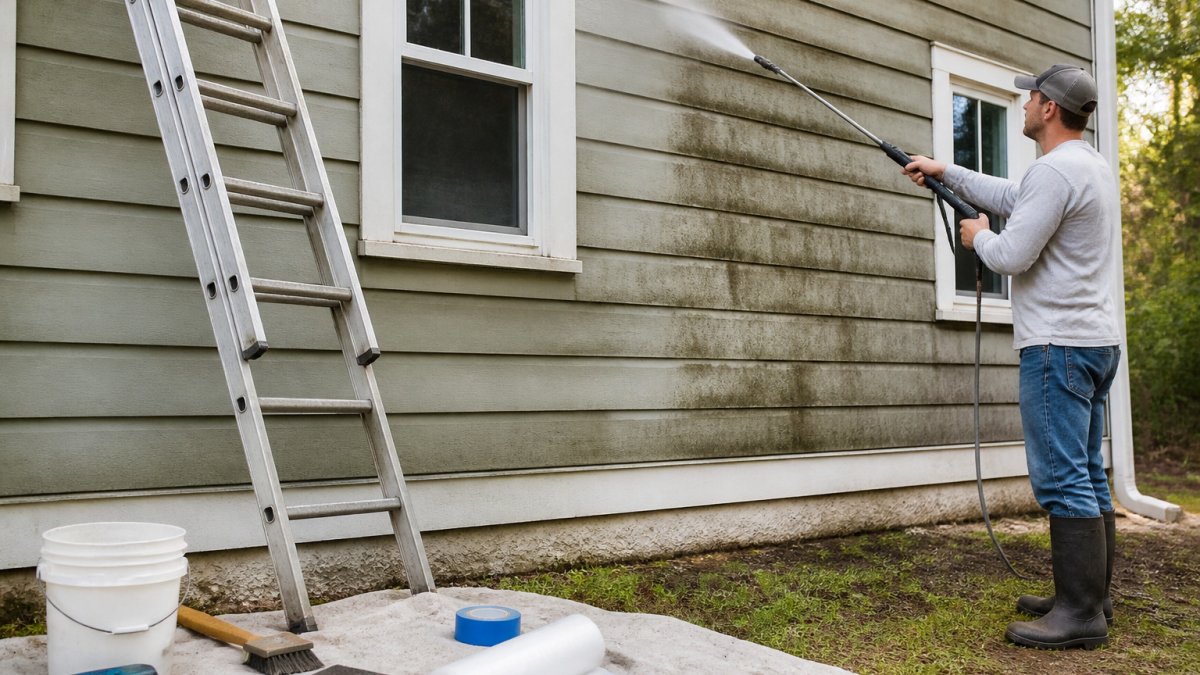
Pressure washing relies on high-pressure water jets to physically remove surface contaminants. A pressure washer forces water at extreme velocity against siding, concrete, or other surfaces to strip away dirt, grime, and loose debris.
It works quickly with immediate visual results, but doesn't address what caused the growth. Mold, algae, and mildew spores remain dormant, ready to recolonize once conditions favor growth again.
Water Pressure and Equipment Differences: PSI and GPM Explained
Understanding PSI and GPM is essential to choosing the right method.
PSI (pounds per square inch) measures the force of water being expelled. Pressure washers typically run 1,500 to 4,000 PSI for residential use; soft washing systems run 100 to 500 PSI.
GPM (gallons per minute) measures water flow volume. Pressure washers deliver 2 to 4 GPM; soft washing systems deliver 1 to 2 GPM, less water waste and more precise solution application.
The combination matters. A pressure washer at 3,000 PSI and 3 GPM can strip paint, etch surfaces, and force water behind siding panels.
Metric | Soft Washing | Pressure Washing |
PSI Range | 100-500 | 1,500-4,000 |
GPM Range | 1-2 | 2-4 |
Primary Cleaning Method | Chemical solution | Water force |
Dwell Time Required | 24-48 hours | None |
Surface Damage Risk | Low | High |
Benefits of Soft Washing Siding
When you choose soft wash vs pressure wash for siding, you're investing in longevity and surface preservation.
Bright Brothers of Space City
Root-Level Treatment of Organic Growth
The biggest advantage of soft washing is that it eliminates the organism causing the problem. Mold, algae, and mildew thrive in moist environments; soft washing solutions kill them at their source.
Pressure washing removes the visible growth, but spores and root structures remain. Within weeks or months, the growth returns, and repeated pressure washing accelerates surface damage.
Key Takeaway Soft washing treats the cause; pressure washing treats the symptom. That's why soft-washed surfaces stay cleaner longer.
Extended Cleaning Longevity
Most homeowners who switch from pressure washing to soft washing report their siding stays cleaner for 12 to 24 months. Pressure-washed surfaces typically show regrowth within 6 to 12 months, the difference is whether you eliminated the organisms or just the visible layer.
That longevity means fewer cleaning cycles and lower long-term maintenance costs.
Pressure Washing Damage to Siding: Risks and Surface Damage
Understanding the risks of pressure washing explains why soft wash vs pressure wash for siding isn't just a preference, it's a durability decision.
Paint Damage and Etching
High-pressure water can strip paint from siding, trim, and architectural details. Once paint is compromised, water penetration accelerates, leading to rot, mold behind the surface, and structural damage, and degradation may only appear months later.
Etching occurs when high-pressure water scarifies certain materials. Brick, stucco, and fiber cement are particularly vulnerable; etching creates micro-damage that traps dirt and moisture, causing faster deterioration and discoloration.
Watch Out Pressure washing at 3,000 PSI or higher can permanently scar stucco and brick. Once etched, the surface cannot be restored, only replaced. This damage is why many contractors now recommend against pressure washing on older homes.
Water Intrusion Behind Siding Panels
High-pressure water can force its way behind siding panels, into gaps, and behind trim.
Vinyl siding is particularly vulnerable: its seams and overlaps aren't designed to withstand high-pressure jets. Water forced behind panels can damage the house wrap, insulation, and framing, and repairs often require partial siding removal costing thousands.
Recommended Cleaning Method by Siding Material
Not all siding responds the same way to cleaning. Your material determines which method is safer and what pressure range is defensible.

Vinyl Siding
Vinyl is the most common siding in the country and the most forgiving of soft washing, but it is not pressure-wash friendly.
Soft washing is the default for vinyl: apply a diluted solution at low pressure, let it dwell, and rinse at garden-hose pressure.
Brick and Stucco
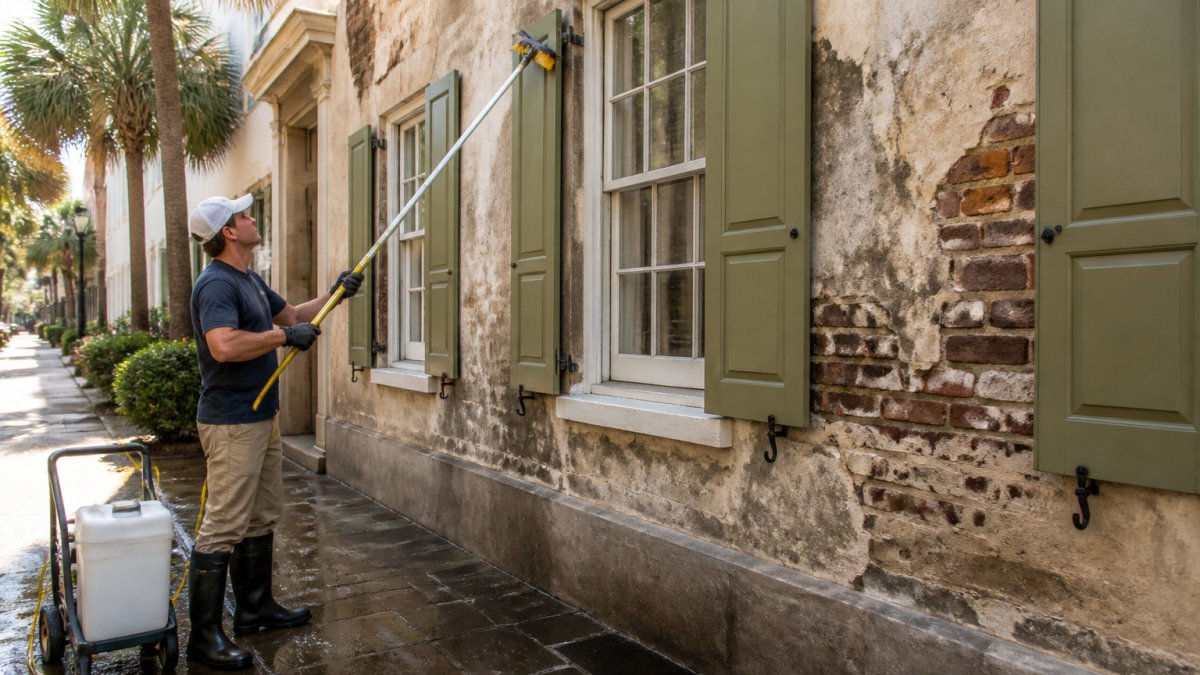
Brick and stucco are porous, so they absorb water and hold onto organic growth.
Stucco is more fragile than brick.
Soft washing is the right call for both: use a masonry-formulated solution, keep pressure low, and rinse thoroughly so no residue stays in the pores.
Wood and Fiber Cement
Wood siding, cedar, redwood, pine, and engineered wood, is vulnerable to pressure washing in ways that show up later.
Fiber cement (brands like James Hardie) is more durable than wood but still not a pressure-washing surface.
Soft washing preserves both. On wood, use a solution appropriate for the finish, keep dwell time moderate so the wood doesn't stay saturated, and rinse thoroughly.
Aluminum, Engineered, and Painted Siding
Aluminum siding dents easily and its factory finish can be scratched by grit driven at high velocity, so soft washing is again safer. The same applies to any painted siding: the paint film is the protective layer, and once pressure washing compromises it, water reaches the substrate and failure accelerates.
Watch Out Manufacturer guidance always wins. If your siding's care instructions specify a maximum pressure, a prohibited cleaning agent, or a required rinse step, follow them, ignoring them can void your warranty and leave you paying for damage that would otherwise have been covered.
Quick Reference by Material
Siding Material | Recommended Method | Pressure Ceiling | Main Risk |
Vinyl | Soft wash | Garden-hose pressure | Warping, water behind panels |
Brick | Soft wash | Low | Mortar erosion, spalling |
Stucco | Soft wash | Low | Cracking, water intrusion |
Wood | Soft wash | Low | Grain raise, splintering, rot |
Fiber cement | Soft wash | Low | Finish scarring, chipping |
Aluminum | Soft wash | Low | Denting, finish scratching |
Painted siding | Soft wash | Low | Paint film failure |
If you take one thing from this section: for every common siding material, soft washing is the safer default. The differences between materials are mostly about which cleaning solution and dwell time to use, not whether to reach for high pressure.
How to Safely Remove Moss from Roof Shingles
Roof cleaning requires special care because shingles are fragile and water intrusion can cause serious damage.
Chemical Treatment Approach
Roof moss removal starts with a gentle application of specialized cleaning solution designed for shingles. It kills moss and algae without damaging the shingle material or roof structure.
The chemical treatment works slowly: moss begins to die within 24 hours but may take several days to fully decompose.
Rinsing and Dwell Time Considerations
After the chemical treatment has time to work, gentle rinsing removes the dead moss. Low-pressure rinsing is essential.
Dwell time for roof treatment is typically 48 to 72 hours, during which the chemical kills the organism and you should avoid foot traffic on the roof.
Pro Tip Never pressure wash a roof. Even at 1,000 PSI, water can damage shingles and cause leaks that develop months later. Professional soft washing is the only safe approach for roof moss removal.
DIY Versus Professional: Making the Right Choice
Most articles tell you soft washing is safer and stop there. The harder question is whether you should do it yourself. Here is a practical framework.
When DIY Makes Sense
Soft washing is more DIY-friendly than pressure washing because chemistry, not force, does the cleaning. A homeowner with basic equipment and reasonable caution can often handle a single-story wall, a small section of siding, or a spot treatment. DIY tends to make sense when:
The siding is a single, well-understood material (vinyl is the easiest).
The area is reachable from the ground with a garden-hose-fed sprayer, no ladders over hard surfaces, no roof work.
The growth is light to moderate, not a decades-old infestation.
You are willing to test a small area first and stop if anything looks wrong.
When to Hire a Professional
Hiring out is the better call when the job involves any of the following:
Height or access risk. Two-story walls, steep grades, or anything requiring a ladder near power lines or windows.
Roof work. Roof cleaning combines fall risk with the potential for serious water damage. This is not a DIY job for most homeowners.
Fragile or historic materials. Old stucco, historic brick, and failing paint need a trained eye.
Large or heavily soiled areas. A whole-house job with heavy organic growth is a lot of solution, dwell time, and rinsing to manage correctly.
What DIY Actually Requires
If you go the DIY route, the equipment list is shorter than most people expect, but the safety and environmental steps are not optional:
A pump sprayer or hose-end sprayer for applying the cleaning solution at low pressure.
A garden hose for rinsing, not a pressure washer.
Personal protective equipment: chemical-resistant gloves, eye protection, and a respirator if you are mixing concentrates.
Plant and pet protection: cover or pre-wet landscaping, keep pets and people away from the work zone, and rinse plants thoroughly before and after.
The Cost and Value Trade-Off
DIY looks cheaper on paper because you're not paying for labor, but the real comparison is the total cost of the job, including the risk of getting it wrong. A homeowner who strips paint, etches stucco, or forces water behind vinyl panels can spend far more on repairs than professional cleaning would have cost.
Key Takeaway The rule of thumb: if the job is low, reachable from the ground, on a forgiving material, and lightly soiled, DIY is reasonable. If any of those conditions is false, especially height, roof work, or fragile materials, hire a licensed and insured professional.
Questions to Ask Before You Hire
If you decide to hire, a few questions separate a qualified contractor from a risky one:
Are you licensed and insured, and can you provide proof?
What cleaning solution do you use, and how do you protect landscaping and pets?
How do you handle runoff?
What pressure and method will you use on my specific siding material?
What happens if my siding or paint is damaged during the job?
A contractor who answers these clearly has done the work before. One who cannot is a liability you don't want on your property.
Frequently Asked Questions
What is the main difference between soft wash and pressure wash for siding?
Soft washing uses low-pressure water combined with specialized cleaning solutions to remove organic growth like mold, algae, and mildew at the root level. Pressure washing relies on high-pressure water jets (typically 1500+ PSI) to blast away surface contaminants. Soft washing is gentler on siding materials and produces longer-lasting results, while pressure washing works faster on heavy dirt but risks paint damage and water intrusion.
Can pressure washing damage my vinyl siding?
Yes. High-pressure water can strip paint, etch vinyl surfaces, and force water behind siding panels, leading to moisture damage and rot. Vinyl siding is particularly vulnerable because it is softer than brick or stucco. Pressure above 1500 PSI is generally unsafe for vinyl. Soft washing is the recommended method for vinyl siding because it cleans effectively without the risk of surface scarring or water intrusion.
How often should I clean my siding to prevent moss and mold buildup?
Soft-washed siding typically stays clean 2-3 years or longer because the chemical treatment kills organic growth at the root. Pressure-washed surfaces may require cleaning annually since only surface contaminants are removed. Frequency depends on your climate, shade, and moisture exposure. Shaded areas and humid climates develop organic growth faster.
Is soft washing safe for all siding materials?
Soft washing is safe for most materials, including vinyl, wood, fiber cement, brick, and stucco. However, the cleaning solution concentration and dwell time must be adjusted for each surface. Some older painted wood siding may need extra care. Professional soft washing services adjust their approach based on your specific siding material to ensure both effectiveness and safety.
GET A QUOTE

Comments