

Prevent Algae Growth on Driveway Concrete
Table of Contents
Why Concrete Turns Green and Algae Grows on Driveways
Moisture, shade, and poor drainage create ideal conditions
How algae spores settle and spread
How to Remove Algae from a Concrete Driveway
Pressure washing and its limitations
Using the best algae cleaner for concrete
Scrubbing and household cleaning options
Concrete Sealer to Prevent Algae Growth
Match the sealer to your concrete, not the label
Penetrating vs. film-forming sealers: the real trade-offs
Preparation and application that actually hold up
Reapplication and maintenance
Driveway-Specific Prevention Plan
Improving drainage and surface slope
Managing shade and airflow
Seasonal maintenance schedule
Diagnosing and Stopping Recurring Algae
Run a simple moisture diagnosis
The five most common hidden moisture sources
A measurable maintenance cadence
When to bring in help
Frequently Asked Questions
Last Updated: October 7, 2026
Why Concrete Turns Green and Algae Grows on Driveways
Algae growth on concrete driveways is a common problem: green or dark slime appears because concrete lets algae spores settle and thrive. Understanding why is the first step to prevent algae growth on driveway concrete.
Algae isn't permanent, with the right approach, you can stop it returning.
Moisture, shade, and poor drainage create ideal conditions
Algae doesn't grow on dry concrete. Three conditions work together to create an environment where it thrives.
Moisture is the primary culprit. Rain, dew, sprinkler overspray, and gutter runoff leave water sitting on concrete.
Shade accelerates the problem. Overhanging trees and nearby structures prevent concrete from drying quickly, giving algae time to establish colonies.
Poor drainage compounds everything. If your driveway slopes toward your house or water pools in low spots, you have a persistent moisture problem.
How algae spores settle and spread
Algae spores are microscopic and airborne. They land on your concrete constantly but only activate when conditions are right. Once moisture and shade combine, spores germinate into visible colonies of green algae, moss, lichens, and liverworts within days or weeks.
Established algae releases more spores, so one small patch can colonize your entire driveway if untreated. The slippery surface also becomes a safety hazard.
How to Remove Algae from a Concrete Driveway
Removing existing algae is essential before prevention. A dirty, algae-covered driveway won't benefit from sealing or drainage improvements until the surface is clean.

Pressure washing and its limitations
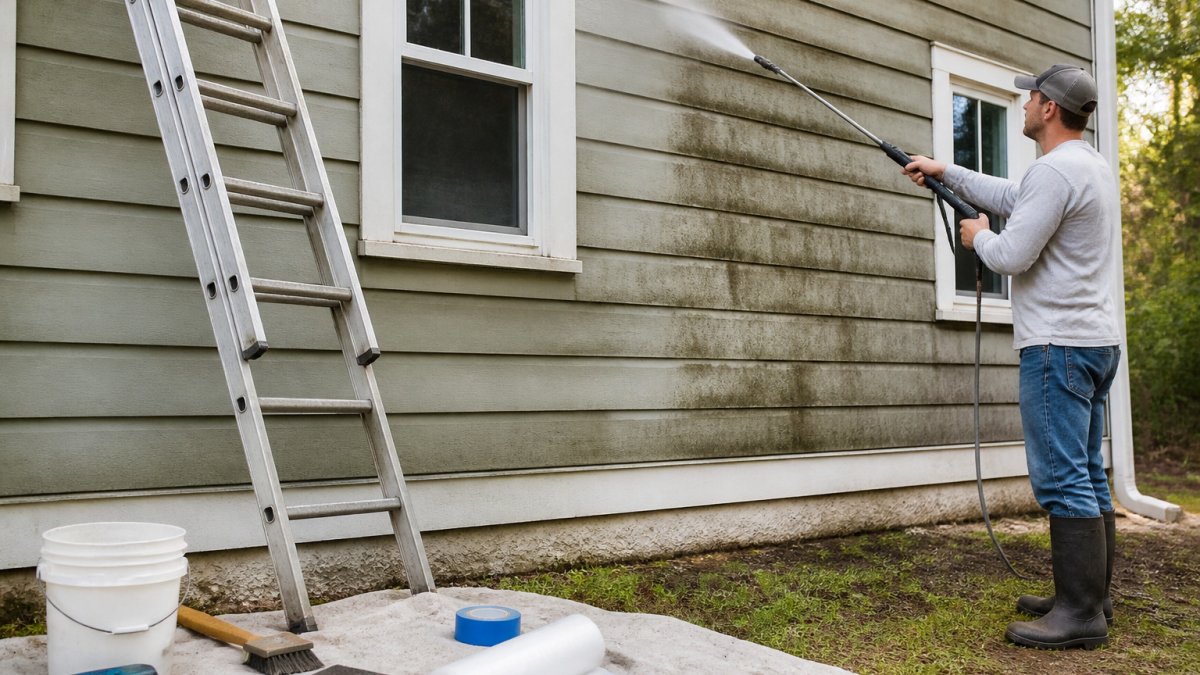
Pressure washing is fast and effective, but limited: high-pressure water blasts away visible algae but doesn't kill spores embedded in the concrete's pores, which is why algae often returns within months.
Pressure washing also carries risks. Too much pressure can:
Damage concrete sealer or protective coatings
Erode the concrete surface itself
Strip paint from nearby siding or trim
The solution is to combine pressure washing with an algae-killing treatment. Clean first, then treat, then seal. That sequence prevents regrowth far better than pressure washing alone.
Using the best algae cleaner for concrete
An algae-killing cleaner or algaecide is the most effective removal method when paired with scrubbing. These products penetrate the surface and kill algae spores at the root, not just the visible growth.
Look for cleaners formulated for concrete, since general-purpose cleaners often don't work on porous surfaces. The best algae cleaner for concrete breaks down the algae's cell structure and prevents quick return.
Application is straightforward:
Spray the cleaner evenly across the algae-covered area
Let it sit for the time recommended on the label (usually 10-30 minutes)
Scrub with a long-handled brush to loosen stubborn growth
Scrubbing and household cleaning options
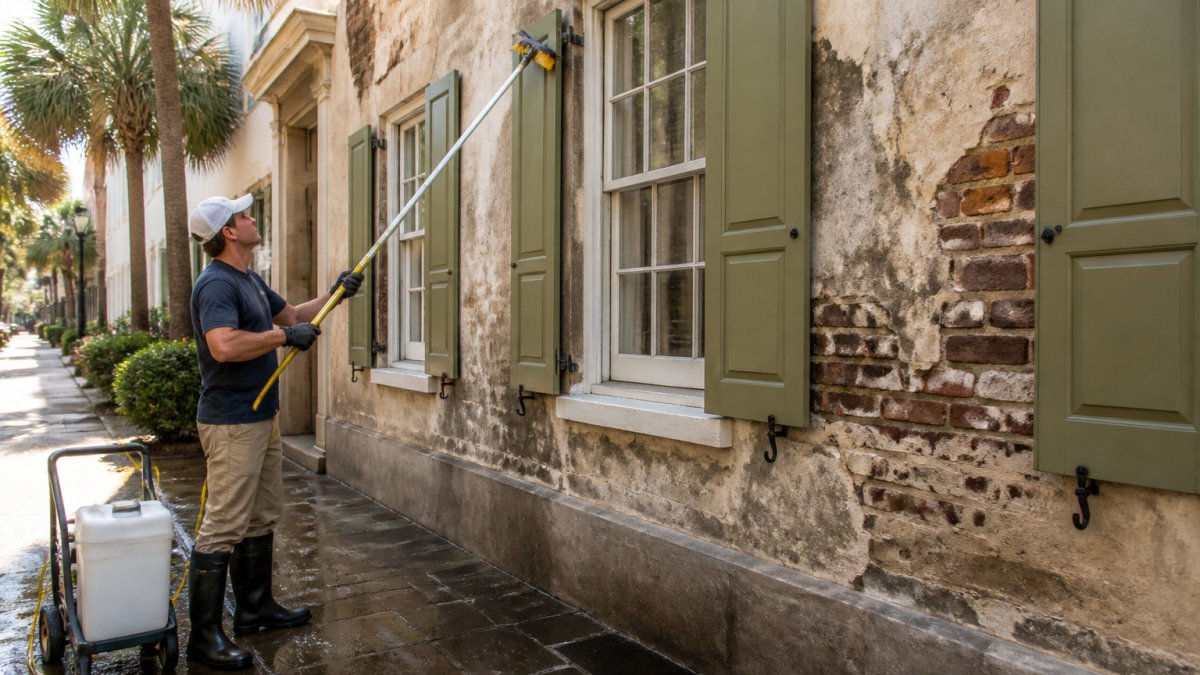
A long-handled brush and elbow grease work well for light algae, breaking apart the colony and removing dead growth after a chemical cleaner has done its work.
For household options, one part bleach to three parts water kills algae, but bleach fades concrete color and can harm nearby plants.
The most practical approach combines a commercial algae cleaner with a pressure washer at medium pressure (1,500-2,500 PSI), removing algae quickly without damaging the concrete.
Concrete Sealer to Prevent Algae Growth
After removing algae, sealing your concrete is the single most important prevention step. A quality concrete sealer blocks moisture from penetrating the surface, starving algae of the water it needs. But sealers are not interchangeable, the wrong product can trap moisture, create a slick surface, or peel within a season.
The Household Guy
Match the sealer to your concrete, not the label
Before buying anything, answer three questions about your driveway:
Is the surface bare, painted, or previously sealed? A penetrating sealer won't absorb into a slab with a film-forming coating. If unsure, pour a cup of water on it: if it beads and sits, a coating is present; if it soaks in and darkens within a minute or two, the surface is likely bare and ready for a penetrating product.
How old is the concrete? New slabs should cure at least 28 days before sealing. Sealing too early traps moisture inside and can cause a cloudy or blotchy finish.
What finish do you have? Broom-finished and exposed-aggregate driveways take penetrating sealers well. Stamped or polished surfaces often need a product recommended by the installer, since a generic sealer can fill the texture or dull the finish.
Penetrating vs. film-forming sealers: the real trade-offs
Penetrating sealers (silane, siloxane, and blends) soak into the pores and chemically repel water from within.
Film-forming sealers (acrylic, polyurethane, epoxy) sit on top of the surface.
Most practitioners find a penetrating silane-siloxane sealer the best balance for a residential driveway: invisible, breathable, and traction-neutral. Film-forming products make more sense on decorative or stamped concrete where appearance matters more than slip resistance.
Pro Tip If your driveway slopes toward the street or garage, prioritize a penetrating sealer or a film-forming product labeled for traction. A glossy film on a wet slope is a slip hazard, especially in shaded areas where algae already tends to grow.
Preparation and application that actually hold up
Sealer failure is almost always a preparation failure. The sequence:
Kill and remove all algae first. Sealer over live spores traps them in a protected environment.
Let the concrete dry completely. Wait at least 48 hours after the final rinse, longer in cool or humid conditions. Moisture under a film-forming sealer causes white blotches and peeling.
Check the forecast. Apply when rain isn't expected for 24-48 hours and surface temperatures are within the label range, usually above 50°F and below 90°F.
Apply in thin, even coats. Two thin coats beat one heavy coat. Over-application is the most common DIY mistake, causing puddling, tackiness, and uneven sheen.
Respect dry time before traffic. Keep vehicles off for the full cure window on the label, often 24-72 hours for film-forming products, less for penetrating sealers.
Reapplication and maintenance
Penetrating sealers need reapplication every 2-5 years; film-forming sealers every 1-3 years, with worn tire paths often needing spot treatment first. Test by sprinkling water on the surface: if it soaks in instead of beading, the sealer is spent.
Watch Out Never mix sealer brands or chemistries on the same slab without confirming compatibility with the manufacturer. A solvent-based product over a water-based coating, or vice versa, can cause the new layer to lift the old one.
A sealed driveway isn't maintenance-free, but it dramatically slows moisture penetration, the root cause of algae regrowth. Pair it with the drainage and shade fixes below for the longest-lasting result.
Driveway-Specific Prevention Plan
Preventing algae growth on driveway concrete requires addressing the root causes: moisture, shade, and poor drainage. A seasonal schedule keeps your driveway clean year-round.
Improving drainage and surface slope
Check your driveway's slope. Water should flow away from your house toward the street or a drainage area. If it pools anywhere, you have a drainage problem.
Simple improvements include:
Cleaning gutters and downspouts so water flows away from the driveway
Filling low spots with self-leveling concrete repair compound
Installing a drainage channel or trench if water consistently pools
These changes reduce moisture dramatically. Drier concrete resists algae far better than wet concrete.
Managing shade and airflow
Overhanging tree branches are a major source of shade and moisture.
If trees can't be trimmed, remove lower branches or thin the canopy. Better airflow helps concrete dry faster after rain or watering.
For permanent shade from structures, focus on the other prevention strategies. You can't always eliminate shade, but you can manage moisture and seal the surface.
Seasonal maintenance schedule
A simple quarterly check prevents algae from establishing a foothold:
Spring: After winter moisture, inspect for early algae growth. Pressure wash if needed. Reapply sealer if it's been more than 2-3 years.
Summer: Monitor shaded areas for algae. Trim tree branches to improve sunlight. Check drainage after heavy rain.
Fall: Clear leaves and debris that trap moisture. Clean gutters.
Winter: Algae grows slowly in cold weather but can establish in mild climates.
Regular inspections catch problems early, a small patch cleaned immediately prevents a larger problem later.
Diagnosing and Stopping Recurring Algae
If algae keeps returning despite cleaning and sealing, you don't have an algae problem, you have a moisture problem. Algae is a symptom; the fix is finding where the water comes from and why the concrete isn't drying. This is the step most guides skip, and why so many driveways go green again within a season.
Run a simple moisture diagnosis
Before spending money on more cleaner or sealer, spend an afternoon observing. The pattern of regrowth tells you what's wrong:
Algae returns in the same patch every time. That's a low spot or slow-drying area where water pools and doesn't drain or evaporate.
Algae follows a line or edge. That points to runoff from a gutter, downspout, or irrigation head aimed at the driveway.
Algae appears only on one side, near a wall or fence. That's a shade-and-airflow problem, the concrete never gets enough sun or wind to dry.
A useful trick: after a rain, walk the driveway and note where water is still standing two to three hours later. Those are your problem zones. Mark them with chalk and address each one.
The five most common hidden moisture sources
**1.
2. Irrigation overspray. Sprinkler heads near the driveway edge are a frequent culprit.
3. Low spots and settled slabs. Concrete settles. A dip of even a quarter inch can hold a puddle for hours.
4. Perimeter and subsurface water. If the ground around the driveway stays soggy, water may be moving laterally under the slab.
**5.
A measurable maintenance cadence
Rather than guessing when to act, tie maintenance to what you can see and measure:
Inspect monthly during the growing season. Look at shaded edges, tire paths, and any spot that stayed wet after the last rain.
Clean when you see a green tint or a slick feel underfoot. Don't wait for a full colony. A light scrub with a concrete-safe cleaner at first sign is far easier than removing established growth.
Re-test your sealer twice a year. Sprinkle water on the surface. Beading means the sealer is working; soaking in means it's time to recoat.
Key Takeaway Recurring algae is a drainage and drying problem, not a cleaning problem. Fix the water source and the shade, and the algae stops coming back, no matter how often you clean.
When to bring in help
If you've corrected downspouts, irrigation, and shade and algae still returns, the cause is likely subsurface water or a slab that no longer drains properly. Those cases justify a professional assessment, because the fix is a drainage or slab correction rather than another round of cleaning. The team at Sunshine Pressure Washing and Window Cleaning can clean and seal the driveway once the underlying problem is solved.
Frequently Asked Questions
How often should you clean a concrete driveway to prevent algae?
A maintenance schedule of twice yearly, spring and fall, works well for most driveways. In humid climates or shaded areas, quarterly inspections and cleaning every 4-6 months may be necessary. Regular inspections help you catch early growth before it spreads. Pressure washing alone won't prevent algae; you must also address moisture and drainage issues to reduce how quickly it returns.
What concrete sealer can I use to prevent algae from growing?
Penetrating sealers are most effective because they reduce moisture absorption, which algae spores need to establish. Look for sealers labeled as algae-resistant or mold-resistant. Apply sealer every 2-3 years after removing any existing algae and allowing the surface to dry completely. Sealer alone won't stop algae if drainage and shade problems persist, but it significantly slows regrowth when combined with proper drainage and airflow.
Can pressure washing damage a concrete driveway?
Yes, high-pressure washing can erode the concrete surface, especially on older driveways. Use pressure below 3000 PSI and maintain at least 12 inches of distance from the surface. Angle the nozzle away from joints and edges. For delicate surfaces or older concrete, scrubbing with a long-handled brush and an algae-killing cleaner is safer and often more effective than pressure washing alone.
Why does algae keep growing back on my driveway?
Algae returns when conditions that caused it remain unchanged. Poor drainage, overhanging trees creating shade, and dampness from sprinklers or runoff allow algae spores to settle and spread again. Removing visible algae without fixing these root causes guarantees regrowth within months. Address drainage slope, trim vegetation to improve sunlight and airflow, and consider sealing the concrete to reduce moisture absorption for lasting prevention.
GET A QUOTE

Comments