
Prevent Algae Growth on House Siding: A Step-by-Step Guide
Table of Contents
What Causes Algae and Mold Growth on Siding
How to Identify Mold on Vinyl Siding
Sunlight, Shade, and Moisture: Key Prevention Factors
Best Siding Cleaner for Algae Removal
Material-Specific Cleaning Approaches
Environmental Considerations in Cleaner Selection
DIY Solutions vs. Commercial Products
Long-Term Prevention: Landscaping and Airflow
Exterior House Cleaning Frequency and Seasonal Maintenance
Protective Coatings and Preventative Treatments
How Preventative Coatings Work
Material-Specific Coating Selection
Application Requirements and Professional vs. DIY
Durability and Reapplication Cycles
Combining Coatings with Other Prevention Methods
When to Call a Professional for Algae Removal
Frequently Asked Questions
Last Updated: September 30, 2026
What Causes Algae and Mold Growth on Siding
Algae and mold thrive on siding by feeding on organic material and moisture. Spores germinate when conditions align: dampness, shade, and organic buildup. Understanding what causes algae growth on house siding is the first step to learning how to prevent algae growth siding effectively.

Moisture retention is the main culprit. When water sits on siding instead of draining, algae colonies form. Clogged gutters trap water against your house, and vegetation blocks airflow, trapping humidity.
Organic material feeds the growth. Dust, pollen, bird droppings, and tree debris accumulate on siding. Algae and mold spores use this as food. The more debris present, the faster colonies expand.
Algae grows year-round but accelerates in warm, humid months. Spring and summer bring ideal conditions.
Homes in shade can develop visible green slime in weeks during humid seasons. Taking steps to prevent algae growth siding stops most problems before they start.
How to Identify Mold on Vinyl Siding
Look for dark spots, green patches, or black streaks on your siding, especially on the north side where shade promotes growth.
Mold appears as dark, fuzzy spots; algae looks like green slime or tint across large areas. Both are biofilm that clings to siding.
Check these high-risk areas first:
Shaded north-facing walls
Areas near gutters or downspouts
Spots below roof overhangs
Places near trees or vegetation
Low spots where water pools
Run your hand across the siding. Mold and algae feel slimy or rough; clean siding feels smooth.
Dirt washes off easily; mold and algae cling tight and won't rinse away with a garden hose.
Early detection makes removal easier; small patches respond to gentle cleaning, while large colonies require professional treatment.
Sunlight, Shade, and Moisture: Key Prevention Factors
Sunlight is nature's best defense against algae. UV rays kill spores and dry moisture quickly. The shady side of your house is always at higher risk.
Everyday Home Repairs
Improve conditions by pruning tree branches at least 6 feet from siding, removing vegetation touching your house, and trimming hedges near walls. Better airflow dries moisture faster and slows growth dramatically.
Clean gutters twice yearly (spring and fall) to prevent water from dumping down your siding. This single task prevents most moisture problems.
Downspouts should direct water at least 4-6 feet from your foundation to prevent perpetual dampness.
Shade creates the perfect environment for algae. Homes under heavy tree cover need more frequent cleaning.
Best Siding Cleaner for Algae Removal
The right cleaner depends on your siding material. Using the wrong product can cause permanent discoloration, surface etching, or deterioration.
Material-Specific Cleaning Approaches
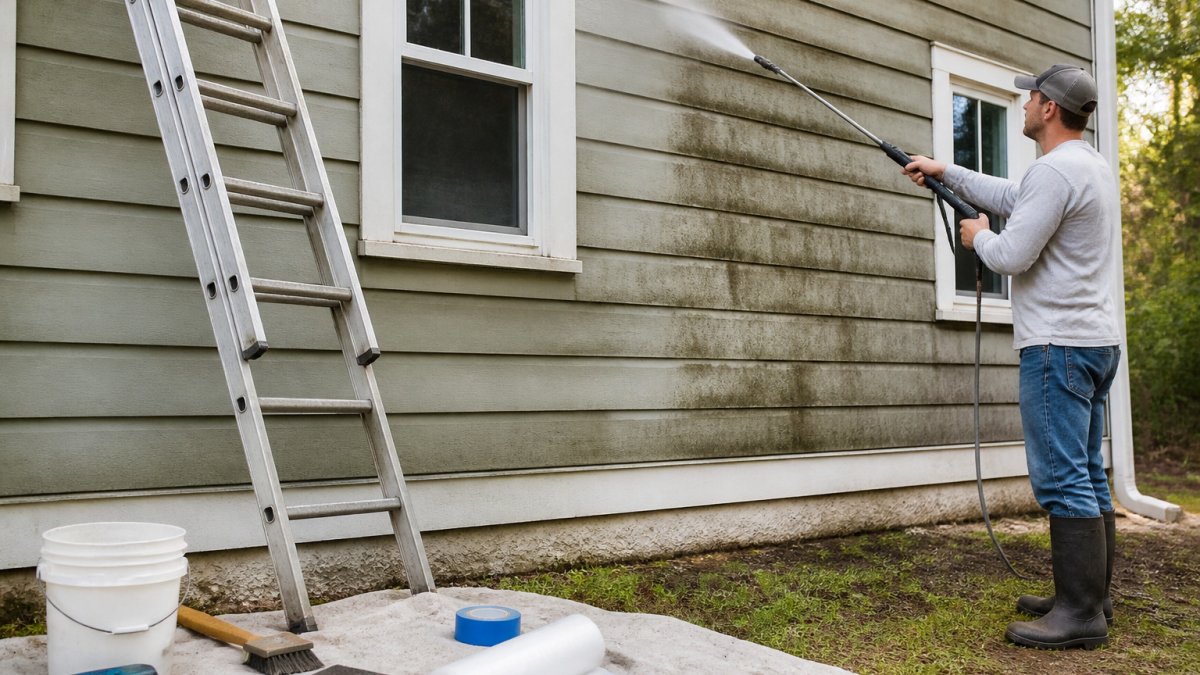
Vinyl Siding: Oxygen-based cleaners are safest for vinyl. Apply with a soft-bristle brush or low-pressure sprayer (below 1,500 PSI), let sit 10-15 minutes, then rinse. Avoid high-pressure washing, which forces water behind panels.
Fiber Cement Siding: Oxygen bleach works well; fiber cement also tolerates diluted chlorine (1 part bleach to 10 parts water). Rinse thoroughly to prevent residue damage. Test any solution on a hidden area first.
Wood Siding: Use oxygen bleach only; chlorine can create permanent light patches. Never exceed 500 PSI. Plan to re-stain or re-seal within 1-2 years after cleaning.
Metal Siding: Use oxygen bleach; avoid chlorine on steel. Use soft washing with low pressure to prevent denting. Inspect for coating damage and touch up if needed.
Environmental Considerations in Cleaner Selection
Oxygen bleach is biodegradable and safer for gardens and storm drains than chlorine. Direct runoff away from flower beds and vegetable gardens.
Enzyme-based cleaners and hydrogen peroxide solutions are gentler alternatives to copper-based products, though sometimes less potent on heavy growth.
DIY Solutions vs. Commercial Products
Homemade oxygen bleach (one part powder to three parts water) works for light algae. Commercial cleaners ($15-$40/gallon) offer stronger results for stubborn growth. Mildewcide additives ($10-$20) prevent regrowth for 2-4 months.
Test any cleaner on a hidden area first and wait 24 hours to check for discoloration or surface changes.
Long-Term Prevention: Landscaping and Airflow
Cut tree branches at least 6 feet from siding and remove climbing vines. Move mulch beds 12 inches from the house to allow airflow and drainage.
Clean gutters in spring and fall to prevent overflow. Downspout extensions should direct water at least 4-6 feet from your house.
Exterior House Cleaning Frequency and Seasonal Maintenance
How often you clean depends on your environment. Shaded homes need cleaning more frequently than sunny ones. Humid climates accelerate growth faster than dry ones.
Most homes benefit from annual cleaning in spring. This removes winter buildup before summer growth season. Homes in heavy shade or near trees may need cleaning twice yearly, spring and fall.
Seasonal inspections catch problems early:
Spring: Check for winter moisture damage and algae starting to grow
Summer: Monitor shaded areas where growth accelerates
Fall: Clean gutters and check for water damage
Winter: Inspect after heavy rains for new moisture issues
Regular maintenance prevents expensive cleaning later. A light annual cleaning takes minimal effort. Waiting until heavy growth requires more aggressive treatment and higher cost.
Document your cleaning schedule. Note which areas need attention and when growth appears. This pattern helps you plan preventative measures.
Professional cleaning once yearly keeps growth minimal. Between cleanings, maintain gutters and trim vegetation. This combination keeps your siding looking fresh without constant effort.
Protective Coatings and Preventative Treatments
Preventative coatings and sealants are among the most underutilized tools in algae prevention. While most homeowners focus on cleaning, protective treatments address the root problem: they make siding inhospitable to algae spore germination and moisture retention. Applied correctly, they can reduce cleaning frequency from annually to every 2-3 years.
How Preventative Coatings Work
There are two main types of protective treatments:
Hydrophobic Sealants create a water-repellent barrier on your siding's surface. Water beads up and runs off instead of sitting on the material, which eliminates the moisture algae needs to germinate. Hydrophobic sealants work on vinyl, fiber cement, wood, and metal. They're typically clear or nearly invisible, preserving your siding's appearance. The trade-off: they wear down over time (typically 3-5 years) and require reapplication. They also don't kill existing algae; the siding must be clean before application.
Mildewcide and Algaecide Coatings contain active fungicides that inhibit spore germination directly. These products create an inhospitable chemical environment for algae and mold. They last 2-3 years before needing reapplication. Some mildewcide coatings are tinted or slightly visible; others are clear. The advantage is they work even if moisture is present, though they're most effective when combined with hydrophobic sealants.
Material-Specific Coating Selection
Vinyl Siding: Most vinyl-specific sealants are hydrophobic, designed to enhance water beading without trapping moisture behind the panels. Look for products labeled "breathable" or "vapor-permeable", these allow trapped moisture to escape while repelling new water. Acrylic-based hydrophobic sealants are common and cost $20-$50 per gallon. Silicone-based sealants are more durable (lasting 4-5 years) but cost $40-$80 per gallon. Avoid oil-based sealants on vinyl; they can soften the material.
Fiber Cement Siding: Fiber cement is porous and benefits from both hydrophobic and mildewcide treatments. A two-step approach works best: apply a hydrophobic sealer first, then a mildewcide topcoat. This combination addresses both moisture and spore germination. Fiber cement sealants are typically more expensive ($30-$70 per gallon) because the material requires deeper penetration. Reapplication every 3-4 years maintains protection.
Wood Siding: Wood requires breathable sealants that allow the material to expand and contract with moisture and temperature changes.
Application Requirements and Professional vs. DIY
Coatings only adhere properly to clean siding. Dirt, algae, mold, or old sealant residue prevents bonding and reduces effectiveness. Professional cleaning before sealing is essential. Many homeowners clean in spring and apply protective coatings immediately after, maximizing the protection window before the next growth season.
Durability and Reapplication Cycles
No coating lasts forever. UV exposure, weather, and foot traffic gradually degrade protective treatments. Hydrophobic sealants typically last 3-5 years before water beading diminishes noticeably. Mildewcide coatings last 2-3 years as the active fungicide depletes. Some products claim longer durability; test claims by checking customer reviews and asking contractors about their real-world experience.
Combining Coatings with Other Prevention Methods
Coatings work best as part of a comprehensive prevention strategy. A hydrophobic sealing combined with gutter cleaning, vegetation trimming, and improved drainage creates a multi-layered defense. Algae requires moisture, organic material, and shade to thrive; removing any one factor significantly slows growth. Coatings address moisture; landscaping addresses shade and organic debris; drainage addresses water pooling.
When to Call a Professional for Algae Removal
Some situations require professional treatment. Heavy growth, large affected areas, or stubborn biofilm need specialized equipment and expertise.
Call a professional when:
Growth covers more than 20% of your siding
DIY cleaning doesn't remove all discoloration
Your siding is delicate or high-value
You're uncomfortable working at height
Growth returns quickly after cleaning
Frequently Asked Questions
Why does green algae keep growing on my vinyl siding?
Algae thrives on vinyl siding because the material retains moisture and provides an ideal surface for organic growth. Shady areas with poor airflow, overhanging trees, and high humidity create perfect conditions for algae and mold spores to develop. Even after cleaning, algae can return if you don't address the underlying moisture and sunlight issues that allow biofilm to form.
How often should I clean my siding to prevent algae buildup?
Most homeowners should clean their siding annually, ideally in late spring or early fall when algae growth is most visible. If your home is in a shaded area with high humidity or surrounded by trees, consider cleaning twice yearly. Regular inspection every 3-4 months helps you catch early signs of mold and mildew before they become stubborn biofilm that requires more aggressive cleaning methods.
Is bleach or vinegar better for killing algae on house siding?
Oxygen bleach is safer and more effective than chlorine bleach for vinyl siding because it kills algae and mold spores without damaging the material or stripping paint. Vinegar has limited effectiveness against established algae. A detergent solution with oxygen bleach and a soft brush provides the best results for removing green slime and mildew while protecting your siding's surface integrity.
Can pressure washing damage siding while removing algae?
High-pressure washing can strip paint, crack vinyl, and force water behind siding panels, causing long-term damage. Soft washing with low-pressure rinse and specialized detergent solutions is the safer approach for algae removal. Professional cleaners use equipment and techniques designed to clean effectively without surface degradation, making it worth the investment if you're concerned about protecting your home's exterior.
GET A QUOTE

Comments