

7 Safe Cleaning Steps for Historic Homes Here
Quick Summary
The safest way to clean historic homes is soft washing, which uses low pressure and a mild cleaning solution that works over time instead of high-pressure blasting. This method removes dirt, algae, and mildew while protecting soft lime mortar, aged wood, and original glass.
Inspect brick and mortar for cracks or loose joints before cleaning starts.
Never use a high-pressure wand close to soft mortar, since one pass can remove joints.
Use the lowest pressure setting or hand-rinse wood siding with a garden hose.
Test any cleaner on a small hidden spot first and wait a day before cleaning the whole house.
Avoid bleach on historic surfaces, since it can discolor wood and weaken mortar.
Table of Contents
Why Historic Homes Need Gentler Cleaning
Older homes were built with materials that behave differently than modern ones. Soft lime mortar, aged wood, and original glass can all be damaged by force or harsh chemicals that newer materials would handle without trouble.
Many homeowners reach for the strongest tool they own. That habit often causes the damage it was meant to prevent.
Common problems with older homes include:
Mortar washed out from between bricks
Wood fibers raised or stripped from siding and trim
Paint pulled off old surfaces
Glass pitted or fogged by harsh cleaners
Gentle cleaning protects the surface and still removes the dirt, algae, and mildew that dull the look of a home.
Soft Washing Historic Homes Instead of High-Pressure Blasting
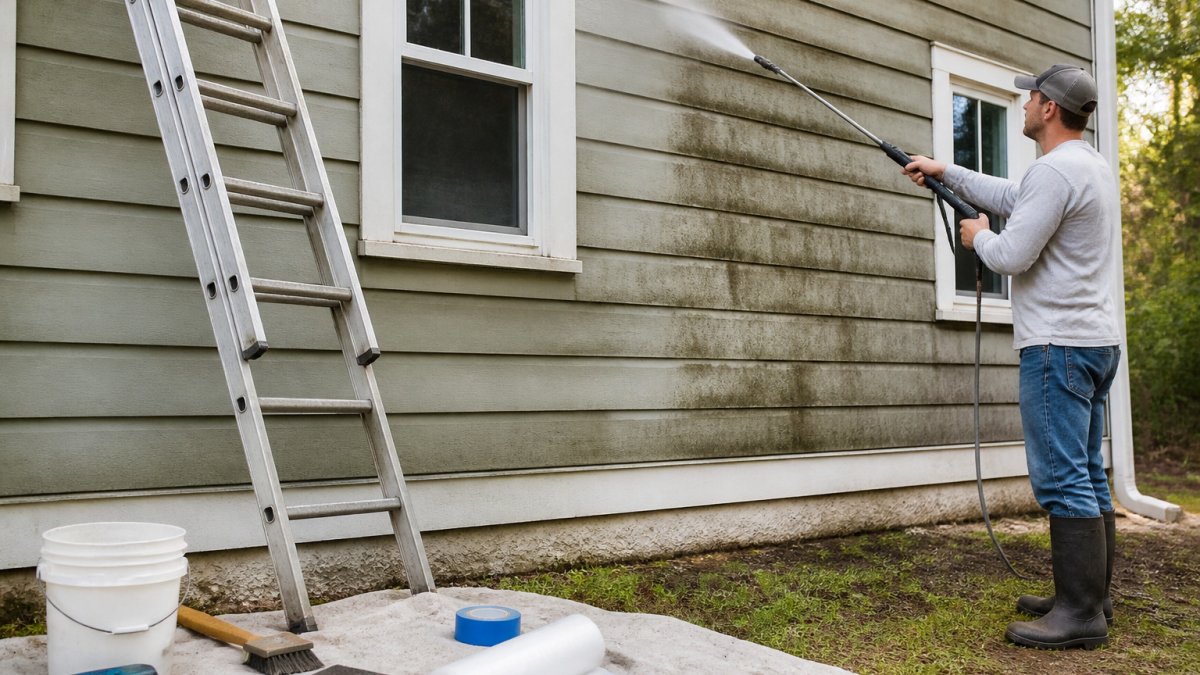
Soft washing uses low pressure and a cleaning solution that works over time. The solution breaks down organic growth gently, so you do not need to blast it off.
This approach fits historic properties well. It removes stains and growth while leaving the underlying material intact.

Step-by-Step: Cleaning Historic Brick Without Damaging Mortar
Brick and mortar are the most common surfaces on older homes. Follow these steps to clean them safely.
Inspect first. Look for cracked, crumbling, or loose mortar before you start.
Wet the surface. Rinse with plain water to keep the cleaner from soaking in too deep.
Apply a mild cleaner. Use a product made for masonry, and test a small hidden spot first.
Let it dwell. Give the solution time to work instead of scrubbing hard.
Rinse from the top down. Low pressure only, so the mortar stays in place.
Watch out: Never use a high-pressure wand close to soft mortar. One pass can remove joints that took decades to settle.
Here is a quick reference for the brick cleaning process, so you can see each step, what to do, and why it matters.
Step | What to do | Key point |
Inspect first | Look for cracked, crumbling, or loose mortar | Check before you start |
Wet the surface | Rinse with plain water | Keeps cleaner from soaking in deep |
Apply a mild cleaner | Use a masonry product, test a hidden spot | Test before full use |
Let it dwell | Give the solution time to work | Avoid hard scrubbing |
Rinse from the top down | Use low pressure only | Keeps mortar in place |
Safe Cleaning Methods for Historic Wood Siding and Trim
Wood needs extra care. Water soaks in, and the wrong pressure lifts the grain.
Use the lowest pressure setting, or hand-rinse with a garden hose
Choose a cleaner made for wood, not a general-purpose product
Work in sections so the wood stays wet, then rinse before it dries
Let the wood dry fully before you repaint or seal it
Choosing a Gentle Cleaning Solution for Wood
Pick a solution labeled safe for wood and check that it fits your paint or stain. Many people find that a mild, plant-based cleaner works well on older siding. Always test a small area and wait a day to see the result before cleaning the whole house.
Cleaning Old Windows and Glass Without Damage
Old glass can be wavy and thin, so it needs a light touch.
Use a soft microfiber cloth, not a rough sponge
Choose a mild cleaner without harsh abrasives
Avoid strong pressure near window seals and frames
Clean on a cloudy day so the solution does not dry in streaks
Mistakes That Damage Historic Surfaces
A common mistake is using bleach on everything. Bleach can discolor wood, weaken mortar, and harm plants around the house.
Other mistakes to avoid:
Starting with high pressure to "see what happens"
Skipping the test spot
Cleaning in direct sun, which dries the solution too fast
Ignoring cracks that let water into walls
Questions to Ask a Pressure Washing Company Before Hiring
Before you hire anyone to clean a historic home, ask these questions:
Do you use soft-wash methods for older surfaces?
What pressure do you use on brick and wood?
Are you licensed and insured?
Will you test a small area first?
How do you protect plants and nearby surfaces?
You can also compare providers on the basis of their answers.
Booking a Careful Cleaning for Your Historic Property
Safe cleaning takes patience and the right method for each surface. If you want a team that works this way, book a gentle house washing service for your siding and brick.
You can also get a quote for your home.
Frequently Asked Questions
What is the safest way to clean the exterior of a historic home?
The safest approach is soft washing: applying a low-pressure stream and a mild, biodegradable cleaning solution that sits on the surface and is rinsed away gently. Start with the gentlest method and a test patch in an inconspicuous spot. Avoid high-pressure nozzles, harsh acids and bleach-heavy mixes, since these can etch old brick, strip finishes from wood and loosen mortar. Working from the bottom up and keeping the solution wet during dwell time helps prevent streaking and staining on historic materials.
Can you pressure wash an old brick house?
You can, but high pressure is risky on older brick. Soft-brick and lime-based mortar can erode or crack when blasted, and the pointing can be forced out. A low-pressure soft wash with a gentle detergent is the safer choice for most historic brick. Ask the provider whether they adjust pressure for soft materials and whether they test a small area first before cleaning the full facade.
How should you clean old windows without damaging the glass or frames?
Use a soft cloth or sponge with a mild, non-abrasive cleaner diluted in water, and avoid razor blades or harsh scrapers that can scratch antique glass. Wood frames should be cleaned gently and kept dry to prevent swelling and rot. Clean in shade to avoid streaks, and rinse with clean water. If glass has lost its finish or the putty is failing, that calls for a repair specialist rather than more scrubbing.
What should I ask before hiring an exterior cleaning company for a historic home?
Ask whether the company is licensed and insured, whether it has experience with historic materials, and what cleaning methods and solutions it uses. Request a test patch on an inconspicuous area and ask how it handles pressure, dwell time and rinsing on brick, wood and glass. Confirm that the crew will protect plants and landscaping and that you can review the work before final payment. Request a written quote so the scope is clear, and check reviews for work on older properties.

Comments